What Is XP in CSGO?
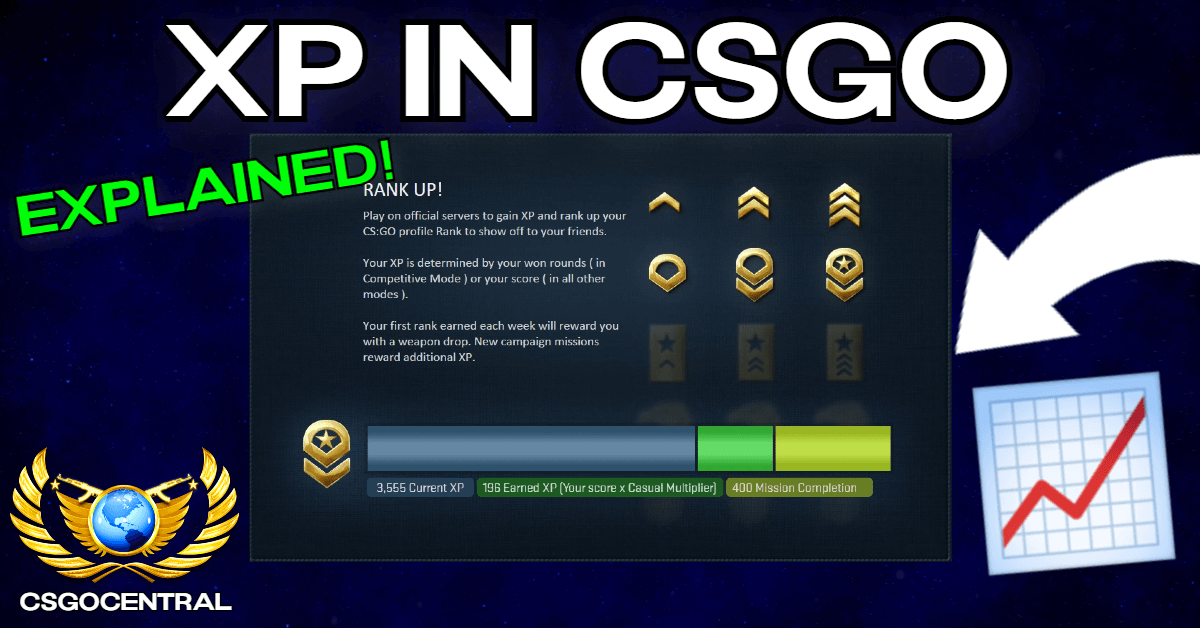
XP, or Experience Points, is the progression system in Counter-Strike: Global Offensive that tracks your activity and rewards you for playing the game. Introduced in the May 26, 2015 update (also known as the "Bloodhound" update), the XP system replaced the previous drop system and added a visible leveling mechanic to the game.
Every time you play a match in CSGO, you earn XP based on your performance and the game mode you are playing. This XP fills a progress bar that determines your Profile Rank, which is displayed on your CSGO profile and in lobbies. The Profile Rank is separate from your Competitive Skill Group (your matchmaking rank like Silver, Gold Nova, or Global Elite) and is purely based on accumulated XP.
Understanding the XP system is important for several reasons. It determines when you receive item drops, influences your eligibility for weekly rewards, and is tied to the Service Medal system that lets you display your dedication to the game. In this guide, we will cover every aspect of the CSGO XP system in detail.
How XP Is Earned
XP is earned by playing matches in CSGO, but the amount you earn varies significantly depending on the game mode, your performance, and whether your weekly XP bonus is active. Here is a breakdown of how XP is earned across different activities:
Competitive Matchmaking
Competitive matches are the primary way most players earn XP in CSGO. The XP awarded in competitive mode is based on the number of rounds you play and your team's performance. You earn XP for each round completed, with bonus XP awarded for winning rounds.
- Base XP per round played: Approximately 4 XP per round
- Bonus XP for round wins: An additional amount for each round your team wins
- Match completion bonus: Extra XP for finishing the entire match (no XP for abandoning)
- MVP bonus: Earning the MVP star at the end of a round provides additional XP
A typical full competitive match (30 rounds) yields roughly 120-300 base XP before any weekly bonus multiplier is applied. Performing well and earning MVPs can push this higher.
Casual Mode
Casual mode awards XP based on round participation and performance, but at a lower rate than competitive. Since casual matches are shorter and less intensive, the XP per hour is generally lower than competitive play. However, casual is a good option for earning XP without the commitment and pressure of a full competitive match.
Deathmatch
Deathmatch awards XP based on the score you achieve during the 10-minute match. Each kill earns points, and bonus points are awarded for using the designated bonus weapon. Deathmatch can be an efficient way to farm XP because matches are short, there is no commitment to stay for a full game, and skilled players can rack up high scores quickly.
- XP per kill: Varies based on game settings, approximately 1-3 XP per kill
- Bonus weapon kills: Extra XP for kills with the rotating bonus weapon
- Match completion: Additional XP for playing the full 10-minute duration
Arms Race
Arms Race is a gun game mode where players progress through a series of weapons by getting kills. XP is earned based on the number of kills and how far you progress through the weapon list. Winning an Arms Race match provides a completion bonus. Arms Race matches are quick (5-10 minutes) and can be a fun way to earn XP.
Demolition
Demolition mode is a shortened version of competitive play with automatic weapon progression. XP is earned similarly to competitive mode, based on rounds played and won. Matches are shorter than competitive, typically lasting 10-15 minutes, making it a middle ground between casual and competitive for XP earning.
Wingman
Wingman is a 2v2 competitive mode played on smaller maps. XP is awarded based on rounds played and won, similar to standard competitive. Wingman matches are shorter (maximum 16 rounds) and can be a fast way to earn competitive-style XP with less time commitment.
Operation Missions
During active CSGO Operations (such as Operation Shattered Web, Broken Fang, or Riptide), completing operation missions awards bonus XP. Operation missions range from simple tasks like "get 10 kills with the AK-47" to more complex objectives. Operations provide significant XP rewards and are one of the most efficient ways to level up when available. Note that Operations require purchasing the Operation Pass.
The Weekly XP Bonus Explained
The Weekly XP Bonus is one of the most important mechanics in CSGO's XP system. Understanding how it works is essential for maximizing your leveling speed and drop eligibility.
How the Weekly Bonus Works
Every week (resetting on Tuesday nights at approximately midnight UTC), each player receives a "reduced XP" state that resets. At the start of each week, your first chunk of earned XP is multiplied by a significant bonus factor. Valve designed this system to reward regular play while discouraging excessive grinding.
The Weekly XP Bonus works on a tiered multiplier system:
- Full bonus (approximately 3-4x multiplier): The first ~3,500 XP you earn in a week receives the full bonus multiplier, effectively tripling or quadrupling your XP gain
- Reduced bonus: After exhausting the full bonus, your XP multiplier decreases to a lower level
- Normal rate (1x): Once the reduced bonus is depleted, you earn XP at the standard rate
- Diminished rate: If you continue playing extensively beyond the bonus thresholds, the XP rate may further decrease
Maximizing Your Weekly Bonus
Since the weekly bonus provides a massive XP multiplier, the most efficient approach to leveling is to play consistently each week rather than grinding marathon sessions. Here are some practical tips:
- Play at least a few matches each week: Even 2-3 competitive matches per week are enough to take advantage of a significant portion of the bonus
- Start your week with competitive or deathmatch: These modes provide good base XP, which gets multiplied by the weekly bonus for maximum returns
- Do not grind past the bonus: Once your XP gain noticeably slows down, it may be more efficient to wait until the next week's reset rather than continuing to play purely for XP
- Play consistently across weeks: Regular weekly play is far more efficient for leveling than sporadic long sessions
Why the Weekly Bonus Matters
The weekly bonus is directly tied to item drops. In CSGO, you receive one item drop per week when you level up your Profile Rank while the weekly bonus is active. Without the bonus, leveling takes much longer, and you are less likely to receive drops in a given week. Players who skip weeks miss out on potential drop opportunities.
Profile Ranks
As you accumulate XP, you progress through CSGO's Profile Rank system. There are 40 Profile Ranks in total, each with a unique name and icon. Profile Ranks are purely cosmetic and are displayed next to your name in lobbies and on your profile.
Complete List of Profile Ranks
The 40 Profile Ranks in CSGO are organized into groups, each named after military ranks with a progression from Recruit through Global General:
- Recruit
- Private Rank 1
- Private Rank 2
- Private Rank 3
- Private Rank 4
- Corporal Rank 1
- Corporal Rank 2
- Corporal Rank 3
- Corporal Rank 4
- Sergeant Rank 1
- Sergeant Rank 2
- Sergeant Rank 3
- Sergeant Rank 4
- Master Sergeant Rank 1
- Master Sergeant Rank 2
- Sergeant Major Rank 1
- Sergeant Major Rank 2
- Lieutenant Rank 1
- Lieutenant Rank 2
- Lieutenant Rank 3
- Lieutenant Rank 4
- Captain Rank 1
- Captain Rank 2
- Captain Rank 3
- Captain Rank 4
- Major Rank 1
- Major Rank 2
- Major Rank 3
- Major Rank 4
- Colonel Rank 1
- Colonel Rank 2
- Colonel Rank 3
- Brigadier General
- Major General
- Lieutenant General
- General
- Global General
Each rank requires progressively more XP to reach. The earlier ranks (Recruit through Corporal) can be achieved relatively quickly, while the higher ranks (Colonel, General) require substantial playtime.
Private Rank 2 Requirement
One of the most significant Profile Rank thresholds is Private Rank 2. Before reaching Private Rank 2, new accounts cannot play Competitive Matchmaking. This was introduced by Valve as an anti-cheat and anti-smurf measure, requiring new players to invest some time in other game modes before accessing competitive play. Reaching Private Rank 2 typically requires several hours of casual, deathmatch, or other game mode play.
Service Medals
Service Medals are special cosmetic items that represent a significant milestone in the CSGO XP system. They are a badge of honor that shows how long and how actively a player has been playing the game.
How to Earn a Service Medal
Once you reach Profile Rank 40 (Global General), you have the option to reset your rank back to Rank 1 in exchange for a Service Medal. The Service Medal is a permanent item that displays on your profile and in the scoreboard during matches. Each year has its own unique Service Medal design.
Service Medal Tiers
You can earn multiple Service Medals in a single year by resetting your rank multiple times. Each subsequent reset within the same year upgrades the medal's appearance:
- First Service Medal (Silver/Default): Earned by reaching Rank 40 and resetting for the first time in a given year
- Second tier (Light Blue): Earned by reaching Rank 40 a second time in the same year and resetting again
- Third tier (Blue): Third reset in the same year
- Fourth tier (Purple): Fourth reset in the same year
- Fifth tier (Pink): Fifth reset in the same year
- Sixth tier (Red): Sixth reset in the same year
- Seventh tier (Global/Gold): Seventh or more resets in the same year, representing extreme dedication
Earning higher-tier Service Medals requires a massive amount of playtime. Most active players earn one or two resets per year, while achieving the highest tiers would require playing CSGO as essentially a full-time activity.
Yearly Service Medals
Each calendar year has its own distinct Service Medal design. Service Medals from earlier years (such as 2015 or 2016) cannot be earned anymore and serve as a record of how long a player has been active. Collecting Service Medals from multiple years shows a long history of dedicated CSGO play.
XP and the Drop System
The XP system is directly connected to CSGO's item drop system. Understanding this connection helps you maximize the value you get from playing.
How Drops Work
In CSGO, players can receive random item drops (weapon skins and cases) by playing the game. However, drops are not purely random. They are tied to the XP and leveling system in the following way:
- Weekly drop: Each week, when you earn enough XP to rank up your Profile Rank, you are eligible for one item drop. This drop can be a weapon skin from one of the active skin collections or a weapon case.
- Drop timing: The drop is triggered by a rank-up event. If you do not rank up during a given week, you will not receive a drop for that week.
- Weekly reset: The drop eligibility resets each week along with the weekly XP bonus (Tuesday night UTC).
- Prime status: Players with Prime status receive better drops from the Prime drop pool, which includes skins from specific collections that are not available to non-Prime players.
Prime vs. Non-Prime Drops
The Prime status distinction significantly affects the quality of drops you receive:
- Prime players are eligible for drops from the active duty skin collections and exclusive Prime-only collections. These drops can include skins worth several dollars or more.
- Non-Prime players receive drops from a more limited pool, typically lower-value skins and graffiti. Non-Prime drops are generally worth very little on the Steam Market.
Prime status was originally earned by reaching Profile Rank 21 and linking a phone number to your Steam account. Later, Valve changed Prime to a purchasable upgrade. This change impacted the XP system's importance for new players, as earning Prime through leveling was no longer possible.
Maximizing Your Drops
To get the most drops from the CSGO system, follow these guidelines:
- Play every week: Since drops are weekly, consistency matters. Playing a few matches each week is better than grinding intermittently.
- Focus on ranking up: Make sure you earn enough XP each week to trigger at least one rank-up, which activates your weekly drop.
- Have Prime status: If you do not have Prime, your drops will be from the non-Prime pool and are unlikely to be valuable.
- Use the weekly bonus efficiently: Play your highest-XP game modes early in the week when the bonus multiplier is active.
Tips to Maximize XP Gain
Whether you are trying to reach Private Rank 2 for competitive access, grinding toward a Service Medal, or just wanting to earn weekly drops efficiently, here are proven strategies for maximizing your XP:
1. Always Use the Weekly Bonus
The weekly bonus multiplier is by far the most significant factor in XP gain. A single match during the bonus period can earn you as much XP as several matches without it. Make it a priority to play at least some matches each week before the bonus is exhausted.
2. Play Competitive for Best XP Per Match
Competitive matchmaking provides the highest XP reward per match. A full 30-round competitive game with the weekly bonus active can yield substantial XP. If you enjoy competitive play, this is the most efficient route to leveling up.
3. Use Deathmatch for Quick Sessions
If you do not have time for a full competitive match, Deathmatch is the best alternative. Matches last only 10 minutes, there is no penalty for leaving, and skilled players can earn good XP through a high kill count. Deathmatch is especially effective for burning through the weekly bonus quickly.
4. Complete Operation Missions
When an Operation is active, missions provide significant bonus XP on top of the regular match XP. Operations are the fastest way to level up in CSGO, though they require purchasing the Operation Pass. If leveling is your goal and an Operation is running, it is worth the investment.
5. Perform Well in Matches
Your individual performance affects XP gain. Earning MVP stars in competitive matches provides bonus XP. Scoring highly in Deathmatch and winning Arms Race games all contribute to higher XP earnings. Focus on playing your best rather than just playing passively.
6. Do Not AFK or Abandon Matches
Going AFK or abandoning matches reduces your XP significantly. Abandoned competitive matches may result in zero XP and a cooldown penalty. Always finish matches you start to ensure you receive full XP credit.
7. Play During Bonus XP Events
Occasionally, Valve runs bonus XP events tied to Majors, game anniversaries, or special promotions. During these events, XP gains are boosted for all players. Keep an eye on CSGO news and updates to take advantage of these limited-time opportunities.
Frequently Asked Questions
Does XP affect my Competitive Skill Group (matchmaking rank)?
No. XP and Profile Rank are completely separate from your Competitive Skill Group. Your matchmaking rank (Silver, Gold Nova, Master Guardian, etc.) is based on your win/loss record and performance in competitive matches, not on XP. A Profile Rank 40 player can be Silver 1, and a Profile Rank 5 player can be Global Elite.
Can I lose XP or get demoted in Profile Rank?
No. XP only goes up, never down. You cannot lose Profile Rank levels. The only way your rank "decreases" is if you voluntarily reset it to earn a Service Medal at Rank 40.
How long does it take to reach Rank 40?
The time to reach Rank 40 varies significantly based on how efficiently you use the weekly bonus and how much you play. Consistently using the full weekly bonus each week, it typically takes several months of regular play to go from Rank 1 to Rank 40. Without the weekly bonus, it would take considerably longer.
Do I get XP from community servers or workshop maps?
No. XP is only earned on official Valve matchmaking servers. Community servers, workshop maps, and custom game modes do not award XP. Only official game modes (Competitive, Casual, Deathmatch, Arms Race, Demolition, Wingman, and Danger Zone) count toward your XP progress.
What happens to my XP progress when I earn a Service Medal?
When you redeem a Service Medal at Rank 40, your Profile Rank resets to Rank 1 and you start the leveling process over. Your Service Medal is added to your inventory as a permanent item. You retain your previous year's Service Medals as well. The XP required for each rank remains the same on each cycle.
Does the XP system still exist in CS2?
Counter-Strike 2 replaced CSGO and introduced its own progression system. The specific mechanics of CS2's XP and ranking system differ from what is described in this guide. For information on CS2's progression, visit CS2Central.gg.
XP and the Prime Upgrade
Historically, the XP system was closely tied to earning Prime status. When Prime was introduced, players could earn it for free by reaching Profile Rank 21 and attaching a phone number to their Steam account. This gave players a strong incentive to level up, as Prime status provided access to better matchmaking and superior item drops.
In June 2021, Valve changed Prime status to a paid upgrade only. New players could no longer earn Prime through leveling; it had to be purchased. This change reduced one of the primary motivations for XP grinding, though the drop system and Service Medals still provide reasons to accumulate XP.
Players who earned Prime before the change retained their status. For new players who purchased Prime, the XP system still determines weekly drop eligibility and Service Medal progress, making it relevant to understand regardless of how Prime was obtained.
Summary
The CSGO XP system is a multifaceted progression mechanic that rewards consistent play. Here are the key takeaways from this guide:
- XP is earned by playing official Valve game modes, with Competitive and Deathmatch being the most efficient
- The Weekly XP Bonus multiplies your XP earnings early each week and is the most important factor in leveling speed
- Profile Ranks range from 1 to 40 and are purely based on accumulated XP, separate from competitive matchmaking ranks
- Service Medals are earned by reaching Rank 40 and resetting, with higher tiers for multiple resets within a calendar year
- Item drops are tied to weekly rank-ups, with Prime players receiving better drops from exclusive collections
- Consistency beats grinding: Playing a moderate amount each week is far more efficient than marathon sessions thanks to the weekly bonus system
Whether you are a new player working toward Private Rank 2 to unlock Competitive Matchmaking, or a veteran aiming for your next Service Medal, understanding the XP system helps you make the most of your time in CSGO.
Disclaimer: This guide reflects the CSGO XP system as it existed before the transition to Counter-Strike 2. Some mechanics described here may have changed in CS2. For current information about Counter-Strike 2's progression system, visit CS2Central.gg.