Getting Started with CSGO
Counter-Strike: Global Offensive (CSGO) is one of the most iconic and enduring first-person shooters in gaming history. Originally released by Valve in 2012, CSGO built upon the legacy of Counter-Strike 1.6 and Counter-Strike: Source to become one of the most popular competitive games in the world. With millions of players, a massive esports scene, and a thriving skin economy, CSGO offers a deep and rewarding experience -- but it can also feel overwhelming for newcomers.
Unlike many modern shooters that emphasize abilities, perks, or hero systems, CSGO is a pure skill-based shooter. Every player starts each round with the same base capabilities. There are no loadout bonuses, no special powers, and no kill streaks. Success in CSGO comes down to mastering core mechanics: precise aim, smart movement, game sense, teamwork, and understanding the in-game economy. This means the learning curve can be steep, but it also means every kill you get and every round you win is earned through your own skill.
This guide will walk you through everything you need to know as a new CSGO player, from the basic game modes and controls to advanced concepts like economy management and utility usage. Whether you are coming from another FPS or picking up a tactical shooter for the first time, this guide will give you a solid foundation to start improving.
Game Modes
CSGO offers a variety of game modes to suit different playstyles and skill levels. Understanding what each mode offers will help you decide where to start and how to practice effectively.
Competitive
Competitive is the heart of CSGO and the mode that most players aspire to master. Two teams of five players face off in a best-of-30-rounds format. One team plays as Terrorists (T-side), whose goal is to plant the C4 bomb at one of two designated bomb sites. The other team plays as Counter-Terrorists (CT-side), who must prevent the bomb plant or defuse it if planted. Teams switch sides after 15 rounds. The first team to win 16 rounds wins the match, or the game ends in a 15-15 draw (in standard matchmaking).
Competitive mode features a ranking system, an in-game economy, and round-based gameplay that rewards strategic thinking and teamwork. It is the most intense and rewarding mode in CSGO, but it also has the steepest learning curve. New players should spend time in other modes to build fundamental skills before jumping into competitive.
Casual
Casual mode uses the same maps and bomb-defusal rules as Competitive, but with relaxed settings. Teams can have up to 10 players per side, players receive free armor and defuse kits, there is no friendly fire, and there is no rank at stake. Casual is an excellent place for new players to learn map layouts, practice aim in a live environment, and get familiar with the round-based flow of CSGO without the pressure of competitive play.
Deathmatch
Deathmatch is a free-for-all or team-based mode focused purely on fragging. Players respawn immediately after death and can switch weapons at any time. There are no rounds, no economy, and no objectives beyond getting kills. Deathmatch is the most popular warm-up mode for CSGO players of all skill levels. Use it to practice your aim, learn spray patterns, and get comfortable with different weapons before heading into competitive matches.
Arms Race
Arms Race is a gun game mode where players progress through a sequence of weapons by getting kills. Each kill advances you to the next weapon in the list, and the first player to get a kill with every weapon (ending with the golden knife) wins. Arms Race is fast-paced and a fun way to try out weapons you might not normally use. It is less useful for competitive practice but great for casual fun and learning weapon handling basics.
Demolition
Demolition combines elements of competitive play and Arms Race. It uses smaller maps and round-based gameplay, but players automatically receive new weapons each round based on their performance. This mode is a good stepping stone between Casual and Competitive, offering a more structured experience than Deathmatch without the full complexity of the competitive economy system.
Wingman
Wingman is a 2v2 competitive mode played on smaller maps with a single bomb site. Matches are best-of-16 rounds. Wingman has its own separate ranking system and is a great way to practice competitive fundamentals with a friend. The smaller team size means each player has more impact, making it an excellent environment for developing individual skills.
Movement Basics
Movement in CSGO is one of the most important skills to master, and it works very differently from most other first-person shooters. In CSGO, your accuracy is heavily affected by your movement -- if you are running while shooting, your bullets will spray wildly in random directions. This core mechanic means that proper movement is just as important as aiming.
Counter-Strafing
Counter-strafing is the single most important movement technique in CSGO. When you are moving in one direction (e.g., pressing the A key to move left), your accuracy is terrible. To shoot accurately, you need to stop moving. But simply releasing the movement key causes your character to decelerate gradually, leaving you inaccurate for a brief moment. Counter-strafing solves this problem.
To counter-strafe, you briefly tap the opposite movement key. For example, if you are moving left (holding A), you quickly tap D to stop your momentum instantly. This brings your character to a complete stop almost immediately, allowing you to fire an accurate shot. The sequence looks like this:
- Hold A to move left behind cover.
- Release A and immediately tap D to stop your momentum.
- Fire your shot while stationary.
- Tap A again to move back behind cover.
Mastering counter-strafing takes practice, but it is absolutely essential for competitive play. It allows you to peek angles, fire precise shots, and retreat to safety in a fluid motion. Every high-level CSGO player uses counter-strafing constantly, and learning it early will dramatically improve your gunplay.
Bunny Hopping
Bunny hopping (or bhopping) is an advanced movement technique that allows players to move faster than the normal running speed by chaining jumps together. The basic principle involves jumping the instant you land while strafing left and right in the air and moving your mouse in sync with your strafe direction. When executed correctly, each successive jump preserves and builds upon your momentum.
In CSGO's standard matchmaking, bunny hopping is intentionally limited by the game's velocity cap, making it inconsistent and difficult to chain more than a few hops. It is not a reliable movement technique for most situations. However, understanding the basics of air strafing (moving your mouse in the direction you are strafing while airborne) is useful for making longer jumps, navigating obstacles, and generally having better air control.
Peeking
Peeking is how you expose yourself to check or challenge an angle. There are several types of peeks in CSGO:
- Wide peek: Swinging out far from cover to take a fight. Useful when you expect the enemy to be holding a tight angle, as it gives you more time to spot and react to them.
- Shoulder peek (jiggle peek): Quickly tapping a movement key to expose just your shoulder, baiting out a shot from the enemy without fully committing. This reveals the enemy's position without putting you at risk.
- Crouch peek: Peeking while crouching to appear at an unexpected height. Useful in certain situations but makes you slower and easier to headshot if the enemy is ready.
Learning when and how to peek is a fundamental part of CSGO gameplay. Poor peeking habits -- like running out into the open without clearing angles -- are one of the most common mistakes new players make.
Shooting Mechanics
CSGO's shooting mechanics are what make the game so challenging and rewarding. Unlike many modern shooters where bullets go roughly where your crosshair is pointing, CSGO features detailed recoil patterns, first-shot inaccuracy, and movement-based accuracy penalties that require deliberate practice to master.
Spray Patterns
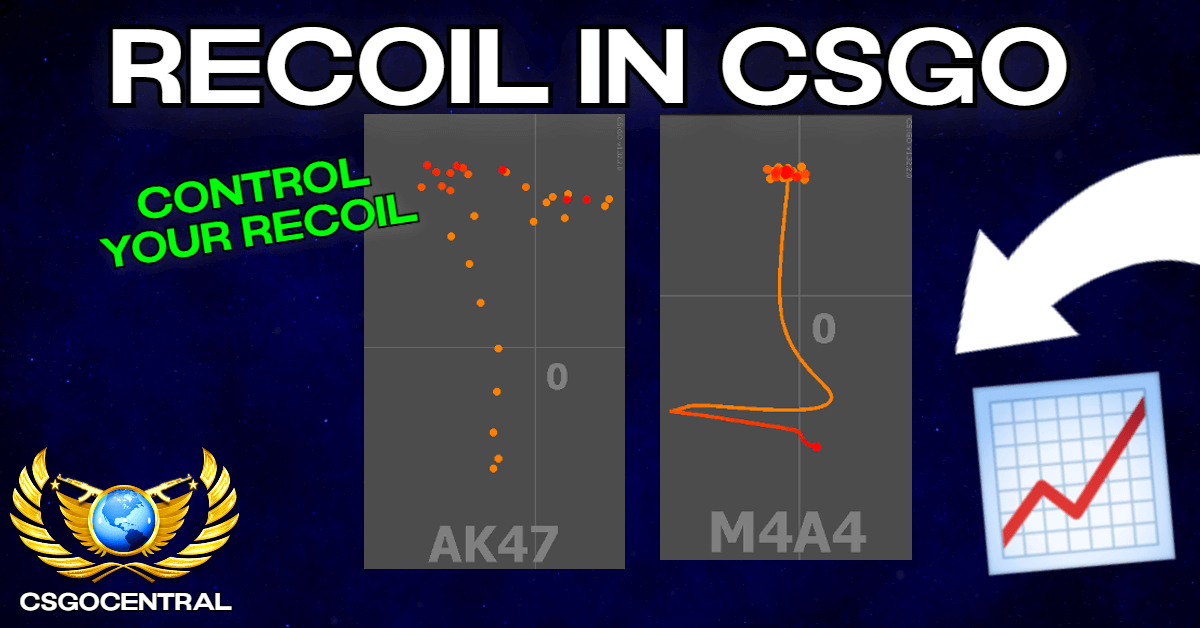
Every weapon in CSGO has a fixed spray pattern -- a predetermined path that your bullets follow when you hold down the fire button. For example, the AK-47's spray pattern starts by climbing upward, then moves to the left, then to the right in a specific sequence. To control your spray, you need to move your mouse in the opposite direction of the pattern. This is called spray control or recoil compensation.
Spray patterns are entirely predictable in CSGO. The AK-47 will always follow the same recoil path, the M4A4 will always follow its own path, and so on. Learning the spray patterns of the weapons you use most frequently is one of the best ways to improve your effectiveness in CSGO. There are community-created workshop maps specifically designed for practicing spray control, and spending 10-15 minutes a day on these maps can yield significant improvements.
Burst Fire
Burst firing involves shooting 2-5 bullets at a time, pausing briefly, and then firing another burst. This technique is useful at medium range where a full spray would be difficult to control but where single taps might not be fast enough to secure a kill. During a burst, the recoil pattern is still active but only involves the first few bullets, which tend to climb straight up. You simply need to pull your mouse down slightly during each burst to keep your shots on target.
Burst firing is an effective middle ground between tapping and spraying and is widely used by players at all skill levels. It is particularly useful with the M4A4 and AK-47 at medium-distance engagements.
Tapping
Tapping means firing a single shot at a time, waiting for your recoil to fully reset between each shot. This technique gives you maximum accuracy per shot and is ideal for long-range engagements where spray control becomes impractical. The AK-47's first bullet is extremely accurate when standing still, making single taps to the head deadly at any range. Tapping is also useful with the Deagle (Desert Eagle), which rewards precise headshots with its high first-shot accuracy and devastating damage.
When to Use Each Technique
- Close range: Full spray. At close range, spray control is easiest, and the high rate of fire gives you the best chance of winning a fight.
- Medium range: Burst fire or controlled spray. Pull down to manage the first 10-15 bullets of the spray pattern, or use short bursts.
- Long range: Tapping. At long range, spray control is nearly impossible, and burst fire can be inconsistent. Tap for precise headshots.
Crosshair Placement
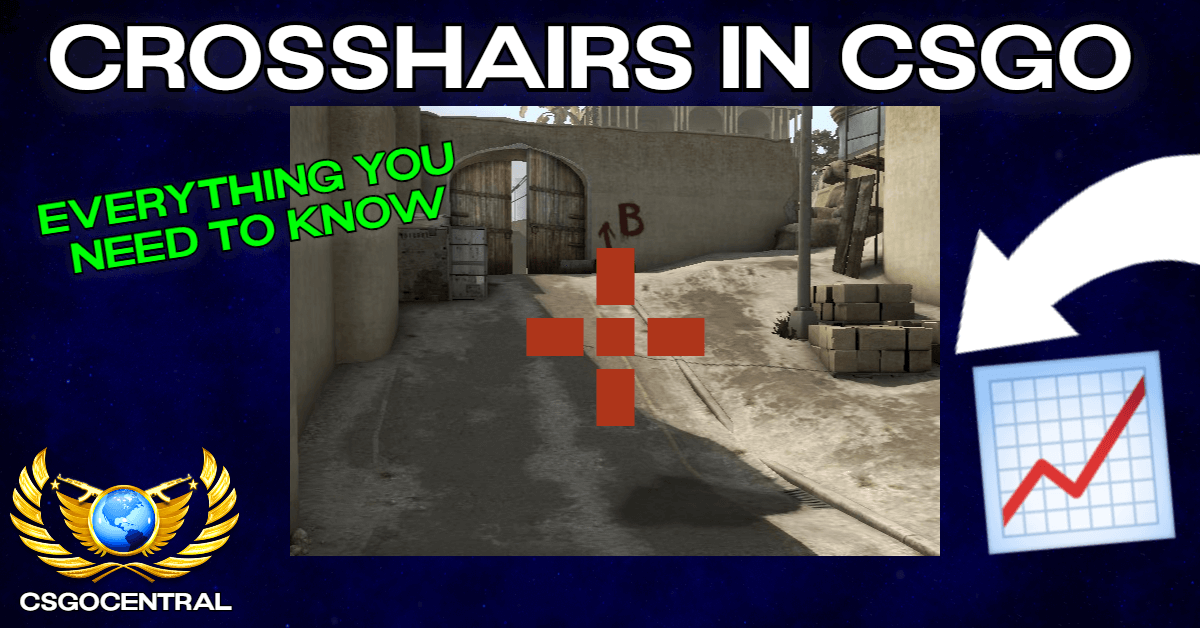
Perhaps the single most impactful aiming habit you can develop is crosshair placement. This means always keeping your crosshair at head level and pre-aimed at positions where enemies are likely to appear. Good crosshair placement minimizes the distance you need to flick your mouse to land a headshot, giving you a significant time advantage in gunfights.
Many new players develop a habit of looking at the ground or aiming at body level. Correcting this one habit can instantly improve your performance. As you learn map layouts, you will develop a mental model of common enemy positions, and your crosshair placement will become increasingly precise.
The Economy System
CSGO's economy system is one of the features that separates it from other shooters and adds a deep strategic layer to every match. Each round, players earn money based on their performance, round outcome, and how many consecutive rounds their team has lost. This money is used to buy weapons, armor, and utility at the start of each round. Managing your economy -- and understanding the enemy's economy -- is a critical skill for competitive play.
How Money Works
Here is a breakdown of the key economic factors in CSGO:
- Starting money: Each player begins a half (rounds 1 and 16) with $800.
- Round win reward: Winning a round awards $3,250 to each player on the winning team (for bomb defusal scenarios).
- Round loss bonus: Losing consecutive rounds awards progressively more money: $1,400 for the first loss, $1,900 for the second, $2,400 for the third, $2,900 for the fourth, and $3,400 for five or more consecutive losses.
- Kill rewards: Each kill awards money based on the weapon used. Rifles award $300 per kill, SMGs award $600, shotguns award $900, and the knife awards $1,500.
- Bomb plant bonus: If the Terrorists plant the bomb, each surviving T player receives an additional $800, even if the round is lost.
- Maximum money: The maximum money a player can hold is $16,000.
Buy Rounds
A buy round (or full buy) is a round where your team purchases full equipment: rifles (AK-47 or M4), kevlar + helmet, a defuse kit (CT side), and a full set of utility (smoke grenade, flashbang, molotov/incendiary, and HE grenade). A full buy typically costs $4,500-$5,500 per player depending on the side and weapon choices. You should always try to full buy when your team's economy allows it, as having the best equipment gives you the highest chance of winning the round.
Eco Rounds
An eco round (or save round) is when your team intentionally spends little or no money to save up for a full buy in a future round. On an eco round, players might buy only a pistol and no armor, or buy nothing at all. The goal is not necessarily to win the round (though eco round wins do happen) but to ensure your team has enough money for a strong buy in the next round. Winning an eco round with pistols against rifles is one of the most exciting plays in CSGO.
Force Buys
A force buy is when your team spends all available money on the best equipment you can afford, even if it is not a full buy. Force buys typically involve a mix of SMGs, pistols (like the P250 or Five-SeveN/Tec-9), and partial armor. Teams force buy when losing a round would put them at a severe disadvantage (such as in the last round of a half) or when they believe the enemy's economy is weak enough that an upgraded pistol round can be competitive.
Anti-Eco Rounds
When you know the enemy is on an eco or force buy round, your team should consider an anti-eco strategy. This often involves buying SMGs (which earn higher kill rewards and are effective against unarmored opponents) rather than rifles. Winning anti-eco rounds cleanly is important for maintaining a strong economy, and losing them can be devastating for team morale and economic position.
Utility Basics
Grenades (called utility in CSGO) are a fundamental part of the game's strategy. Learning when and where to use each type of grenade can dramatically improve your effectiveness, especially in competitive play. CSGO features four main types of grenades, each serving a distinct tactical purpose.
Smoke Grenades
Smoke grenades are arguably the most important utility in CSGO. A smoke grenade creates a large, opaque cloud that blocks vision for approximately 18 seconds. Smokes are used to block sightlines, cut off enemy rotations, obscure bomb plants or defuses, and create safe passage across dangerous areas. Learning key smoke lineups for the maps you play most frequently is one of the best investments of practice time you can make. A single well-placed smoke can neutralize an AWPer, shut down a bombsite rush, or enable a safe bomb plant.
Flashbangs
Flashbangs temporarily blind and deafen enemies who are looking at the flash when it detonates. A properly thrown flashbang gives you a significant advantage when peeking or pushing into a position. The key to effective flashbang usage is throwing them so that enemies cannot easily turn away. Pop flashes (flashbangs that detonate almost instantly after appearing) are the gold standard, as they give enemies no time to react. Each player can carry two flashbangs, and coordinated team flashes are one of the most effective tools for executing a bombsite take.
Molotovs and Incendiary Grenades
Molotov cocktails (Terrorists) and incendiary grenades (Counter-Terrorists) create a patch of fire on the ground that deals damage to anyone standing in it. They are primarily used for area denial -- forcing enemies out of positions, clearing corners, and delaying rushes. A well-placed molotov on a bombsite can delay a plant for several critical seconds. Molotovs can also be used to clear common hiding spots without exposing yourself to enemy fire. Note that molotovs can be extinguished by throwing a smoke grenade on them.
HE Grenades
HE (High Explosive) grenades deal damage in a radius around their detonation point. While a single HE grenade rarely kills a full-health player, they are effective for softening up enemies before a push, finishing off weakened opponents behind cover, and dealing chip damage that adds up over the course of a round. Coordinated HE stacks (multiple players throwing HE grenades at the same spot) can deal devastating damage to grouped-up enemies.
Communication and Callouts
Effective communication is one of the pillars of successful CSGO play, especially in competitive mode. Counter-Strike is a team game, and sharing information with your teammates can be the difference between winning and losing a round. Here are the key communication concepts every new player should understand.
Map Callouts
Every area of every map in CSGO has a specific callout name used by the community. For example, on Dust 2, "Long" refers to the long corridor leading to bombsite A, "Cat" (or Catwalk) is the elevated path from mid to A, and "Tunnels" refers to the underground passages near bombsite B. Learning these callouts is essential for quickly and accurately communicating enemy positions to your team.
You do not need to memorize every callout for every map immediately. Start by learning the callouts for one or two maps that you play most frequently. The in-game radar displays location names that correspond to common callouts, which can help as you learn. Over time, you will naturally pick up callout names through playing and listening to your teammates.
What to Communicate
Good communication in CSGO follows a few basic principles:
- Report enemy positions: Call out where you see enemies and how many. For example: "Two players pushing B tunnels" or "One AWP at Long."
- Report enemy economy: If you notice enemies are on eco (only pistols, no armor), call it out so your team can adjust their strategy.
- Call your utility usage: Let your team know when you are flashing, smoking, or molotoving so they can coordinate their peeks and pushes.
- Report your death: When you die, quickly call out the enemy's position and health (if you tagged them) so your surviving teammates have the information.
- Keep it concise: Do not clog comms with unnecessary chatter during active rounds. Short, clear callouts are always better than long explanations.
Avoiding Toxicity
Toxic communication -- yelling at teammates, blaming others for mistakes, or being negative after losing rounds -- is one of the biggest problems in CSGO matchmaking. Not only does it make the game less enjoyable, but it actively hurts your team's performance. Players who are being berated are more likely to make mistakes and less likely to share useful information. Focus on constructive communication, stay positive after lost rounds, and remember that everyone is trying to improve.
The Ranking System Explained
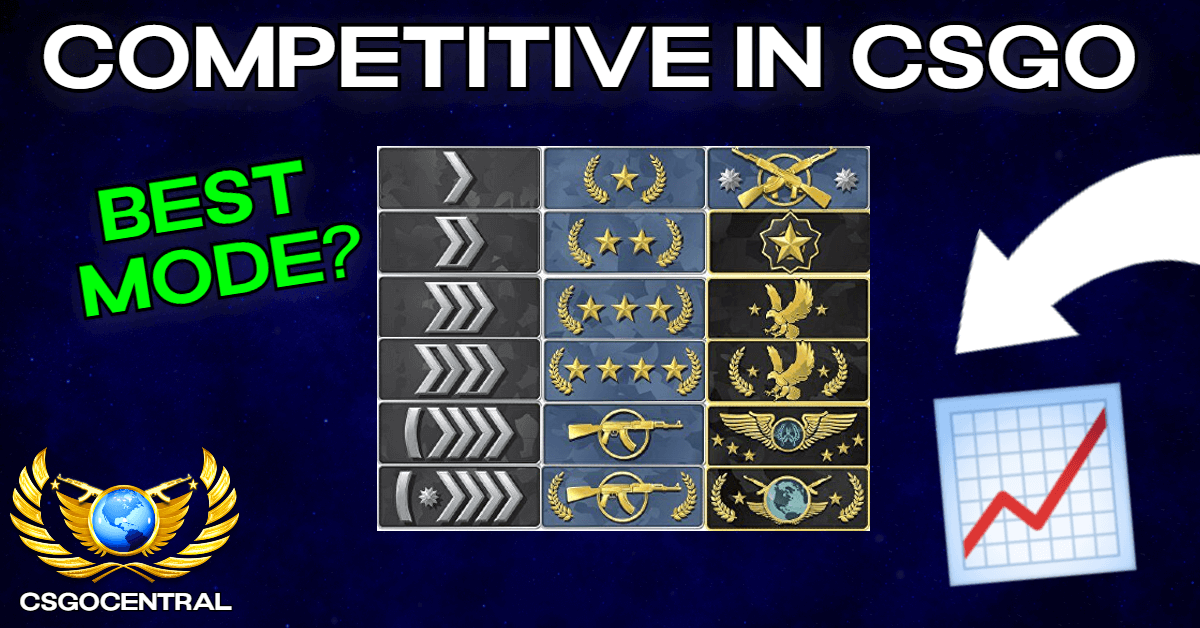
CSGO's competitive matchmaking uses a skill-based ranking system that places you into one of 18 skill groups based on your performance. Understanding the ranking system helps set expectations and track your improvement over time.
The 18 Skill Groups
The CSGO competitive ranks, from lowest to highest, are:
- Silver I (S1)
- Silver II (S2)
- Silver III (S3)
- Silver IV (S4)
- Silver Elite (SE)
- Silver Elite Master (SEM)
- Gold Nova I (GN1)
- Gold Nova II (GN2)
- Gold Nova III (GN3)
- Gold Nova Master (GNM)
- Master Guardian I (MG1)
- Master Guardian II (MG2)
- Master Guardian Elite (MGE)
- Distinguished Master Guardian (DMG)
- Legendary Eagle (LE)
- Legendary Eagle Master (LEM)
- Supreme Master First Class (SMFC)
- The Global Elite (GE)
How Ranking Works
CSGO uses a modified Glicko-2 rating system (Valve has never officially confirmed the exact algorithm, but community research strongly suggests it is Glicko-2-based). Your rank is determined by a hidden skill rating that goes up when you win and down when you lose. The system also considers factors like round wins, MVPs, and individual performance to some degree. To get your initial rank, you need to win 10 competitive matches, with a maximum of two wins counted per day during placement.
Ranking up requires consistent performance at a level above your current rank. A single outstanding game will not rank you up, and a single bad game will not cause a derank. The system measures performance over a series of matches to determine your true skill level. If you stop playing competitive for an extended period, your rank may be hidden until you play again, but your underlying skill rating is preserved.
Tips for Improvement
Improving at CSGO is a gradual process that rewards consistent practice and deliberate focus on specific skills. Here are practical tips that will help you progress faster as a new player:
1. Master Crosshair Placement First
Before worrying about spray control, grenade lineups, or advanced strategies, focus on keeping your crosshair at head level at all times. This single habit will win you more gunfights than any other aiming technique. As you walk around maps, consciously position your crosshair where an enemy's head would be if they appeared around the next corner.
2. Learn One or Two Maps Thoroughly
Rather than playing every map in the pool, pick one or two maps and learn them inside out. Learn the callouts, the common angles, the smoke and flash lineups, and the timing of rotations. Deep knowledge of a few maps is far more valuable than surface-level familiarity with all of them. Dust 2 and Mirage are popular starting maps due to their straightforward layouts.
3. Warm Up Before Playing Competitive
Spend 10-20 minutes in Deathmatch or an aim training workshop map before queuing for competitive. This gets your aim warmed up and your reactions sharp. Going into a competitive match cold almost always results in a slow start as you shake off the rust.
4. Practice Spray Patterns
Dedicate regular practice time to learning the spray patterns of the AK-47 and M4A4/M4A1-S. These are the most commonly used rifles, and controlling their recoil will directly translate to more kills. Use workshop maps like "Recoil Master" to practice in a focused environment with visual feedback.
5. Watch Your Demos
CSGO allows you to download and watch replays of your competitive matches. Reviewing your own gameplay is one of the fastest ways to identify bad habits, positioning mistakes, and missed opportunities. Watch rounds where you died and ask yourself: Could I have held a better angle? Did I peek unnecessarily? Was my utility usage effective?
6. Learn Basic Utility Lineups
You do not need to know hundreds of grenade lineups as a new player. Start with 3-5 essential smokes and flashes for your main maps. For example, learning how to smoke CT spawn from T spawn on Dust 2 is immediately useful in almost every game. Add more lineups gradually as you become comfortable with the basics.
7. Play with a Consistent Team or Group
Playing with the same group of people consistently allows you to develop teamwork, practice strategies, and communicate more effectively. Solo queuing in matchmaking can be unpredictable and frustrating for new players. If you do not have friends who play CSGO, look for communities and Discord servers where you can find teammates.
8. Do Not Neglect Your Settings
Make sure your game settings are optimized for competitive play. This includes:
- Mouse sensitivity: Most competitive players use relatively low sensitivity (between 1.5 and 3.0 in-game at 400 DPI). Lower sensitivity gives you more precise aim.
- Crosshair: Choose a clear, visible crosshair. Many players prefer a small static crosshair without the default dynamic spreading. Use the crosshair customization workshop map to find what works for you.
- Video settings: Prioritize high frame rates over visual quality. Lower settings (shadows, effects, textures) can improve visibility and reduce visual clutter.
- Audio: CSGO's audio provides critical information about enemy positions. Play with headphones and learn to identify the direction and distance of footsteps, grenade sounds, and gunfire.
9. Stay Positive and Be Patient
CSGO has one of the highest skill ceilings of any competitive game. Improvement takes time, and there will be frustrating periods where you feel stuck. The players at the top of the ranking ladder have invested thousands of hours into the game. Focus on learning something new each session rather than fixating on your rank or win/loss record. Every death is a learning opportunity, and every match teaches you something -- even if it does not feel like it in the moment.
10. Use Community Resources
The CSGO community has produced an incredible wealth of educational content. Take advantage of YouTube tutorials, workshop training maps, community guides, and professional match VODs. Watching how professional players position themselves, use utility, and make decisions can give you insights that would take hundreds of hours to discover on your own.
Conclusion
CSGO is a game that rewards dedication, practice, and smart play. The mechanics are demanding, the learning curve is steep, and the competition is fierce -- but that is exactly what makes CSGO so satisfying to play and improve at. By focusing on the fundamentals covered in this guide -- movement, shooting mechanics, economy management, utility usage, and communication -- you will build a strong foundation that will serve you well as you climb the ranks.
Remember that every great CSGO player started exactly where you are now. The difference between a Silver and a Global Elite is not talent -- it is practice, knowledge, and the willingness to learn from mistakes. Take it one step at a time: master your crosshair placement, learn your favorite maps, practice your spray control, and work on communicating effectively with your team. Before you know it, the game that once felt overwhelming will start to feel like second nature.
Welcome to Counter-Strike. Good luck, have fun, and we will see you on the server.